Terrestrial Ecosystems
Biogeographical Realms
 There are six biogeographical realms, roughly equivalent to the
continents (except Antarctica). These are based on relationships among the
plants and animals present in these areas, in turn because of or based on
evolution and continental drift. These are the
Nearctic,
Neotropical,
Palearctic,
Ethiopian,
Oriental,
and
Australian
Realms. Sometimes the Nearctic and Palearctic Realms are combined into the
Holarctic
Realm.
There are six biogeographical realms, roughly equivalent to the
continents (except Antarctica). These are based on relationships among the
plants and animals present in these areas, in turn because of or based on
evolution and continental drift. These are the
Nearctic,
Neotropical,
Palearctic,
Ethiopian,
Oriental,
and
Australian
Realms. Sometimes the Nearctic and Palearctic Realms are combined into the
Holarctic
Realm.
The biogeographical realms can be further subdivided into
biomes, an idea pioneered by V. Shelford. Biomes sort or group areas
according to the types of plants present, and the animals present in each
biome depend on or correspond to the plants in that biome. Biomes are
defined as major regional communities of plants and animals. Some of the
major types of biomes include grassland, woodland, shrubland, semidesert-shrub,
desert, tundra, and forest. Each of these broad categories may be further
divided into various subtypes, based on climate, elevation, etc.
 Grassland may be somewhat of a misnomer, since these communities
contain many plants other than grass (but no trees). These areas are
characterized by a high rate of evaporation, periodic severe drought,
rolling to flat terrain, and 10 to 30 in. of rain/yr. Many require periodic
fire for maintenance. Subcategories include temperate, tropical, and
cultivated grasslands.
Grassland may be somewhat of a misnomer, since these communities
contain many plants other than grass (but no trees). These areas are
characterized by a high rate of evaporation, periodic severe drought,
rolling to flat terrain, and 10 to 30 in. of rain/yr. Many require periodic
fire for maintenance. Subcategories include temperate, tropical, and
cultivated grasslands.
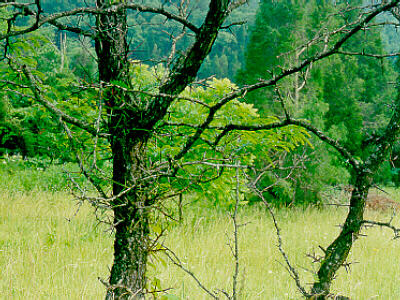 Tropical Savanna and Woodlands: Savanna is grassland with a few
scattered trees in varying numbers. If there are more shrubby/woody plants,
then the area is called a woodland (which is not the same as a forest).
These areas are often characterized by periodic fires and wet and dry seasons
with the plants dormant in dry season. Most of the shrubs and trees are
relatively short-lived. This may also be a successional stage on
previously-disturbed land.
Tropical Savanna and Woodlands: Savanna is grassland with a few
scattered trees in varying numbers. If there are more shrubby/woody plants,
then the area is called a woodland (which is not the same as a forest).
These areas are often characterized by periodic fires and wet and dry seasons
with the plants dormant in dry season. Most of the shrubs and trees are
relatively short-lived. This may also be a successional stage on
previously-disturbed land.
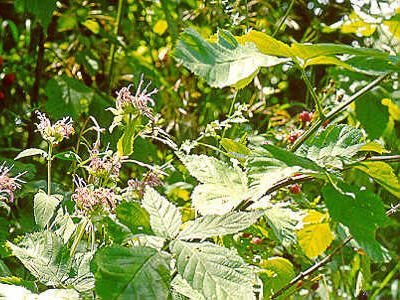 Shrubland may be found in arid and semi-arid areas in warm to
temperate zones. Shrubland may also be found as a successional stage back
to forest on previously-disturbed land. Shrubland is characterized by low,
woody plants called shrubs, which often grow in dense thickets. These
provide nests and and hiding places for local animals, and there is often
deep shade underneath so there is little understory. Some types require
fire. These plants usually have deeper roots sooner than grasses or trees.
Shrubland may be found in arid and semi-arid areas in warm to
temperate zones. Shrubland may also be found as a successional stage back
to forest on previously-disturbed land. Shrubland is characterized by low,
woody plants called shrubs, which often grow in dense thickets. These
provide nests and and hiding places for local animals, and there is often
deep shade underneath so there is little understory. Some types require
fire. These plants usually have deeper roots sooner than grasses or trees.
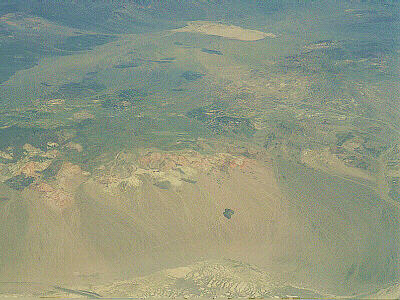 Deserts are areas where evaporation exceeds rainfall. Not all
deserts are warm, and it is possible to have a cold desert. Some deserts
may supply sufficient water for life. Deserts are created or influenced by
things like mountains not letting clouds pass, areas that are too far from
the ocean or other bodies of water, and/or general airflow and barometric
pressure in the area. Due to the low humidity and water level, there
typically are wide daily temperature fluctuations. Rain is brief, heavy,
and seldom, and the plants have evolved such that their flowering schedule
coincides with available rainfall.
Deserts are areas where evaporation exceeds rainfall. Not all
deserts are warm, and it is possible to have a cold desert. Some deserts
may supply sufficient water for life. Deserts are created or influenced by
things like mountains not letting clouds pass, areas that are too far from
the ocean or other bodies of water, and/or general airflow and barometric
pressure in the area. Due to the low humidity and water level, there
typically are wide daily temperature fluctuations. Rain is brief, heavy,
and seldom, and the plants have evolved such that their flowering schedule
coincides with available rainfall.
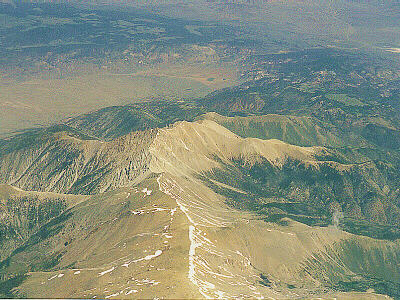 Tundra may be divided into arctic and alpine tundras.
- Arctic tundra is that in very northerly latitudes, encircling the
Northern Hemisphere. Typical vegetation includes sedges, heaths, willows,
etc., and geological features include lakes, bogs, streams, rocky soil, and
some high ground. Because there are few trees and those that do grow here
are short and stunted, it is very windy. Due to the permafrost, the soil
not permeable so water stays near the top of the soil in the little bit that
thaws. Thus plants can get enough water despite the wind.
- Alpine tundra is that at very high altitudes (on mountains), thus
organisms face the additional hardships of thin air and exposure to more
ultraviolet light.
Forests include a variety of types. An important
component is decomposing wood.
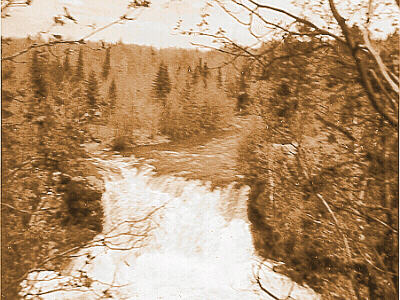
Taiga, Gooseberry Falls, Minn.
- Taiga is a belt of coniferous forest around the Northern Hemisphere
just south of the Arctic Circle. In North America, this would include Alaska,
Canada, northern New England, northern Minnesota, and extends down the
Appalachians for a distance. The climate is cold and summers are short,
cool, and moist. Winters are long, harsh, and dry with long-lasting snow
cover. Plants include conifers, lichens, and mosses.
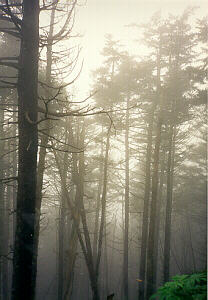
Coniferous Forest, Clingman’s
Dome, Smoky Mountains (© DS)
- There are other temperate zone coniferous forests with warmer
climates. Typically the canopy is very will-developed so there is very
little stratification. The few other plants underneath consist of ferns,
mosses, and some herbaceous plants. The leaves/needles of the conifers do
not readily decompose and mix with the soil.
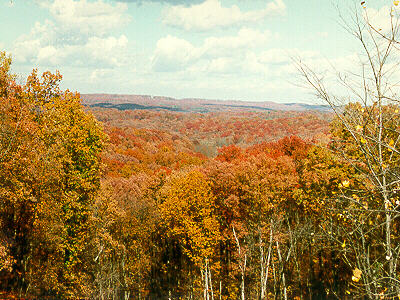
- Eastern Deciduous Forest covers most of the eastern United States,
and includes several subtypes, such as beech-maple, oak-hickory, and mixed
mesophytic (= mixed hardwood). Many areas are well-stratified with a number
of layers of vegetation under the canopy. If trees are of uneven ages and
there are more holes in the canopy, there is more stratification. In older
beech-maple forests with well-developed canopies, there is less stratification
and the forest is more open underneath.
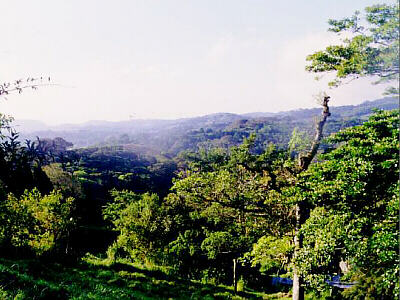
Monteverde, Costa Rica (© DBF)
- Tropical rainforest is equatorial, with high humidity and heavy
rainfall most of the year. Trees include a mixture of small numbers of many
species of trees with none dominant. Other vegetation includes many
epiphytes, climbers and stranglers (stranglers start as epiphytes that send
down roots but increase and take over). Leaf litter decays rapidly, the soil
is usually bare clay, and most nutrients are in the trees, not the soil.
Thus, the soil is poor for farming if/when cleared.
- Jungle is tangled vegetation of second-growth forest when the
primary rainforest has been destroyed, often on abandoned farmland. Whereas
tropical rainforest has sparse undergrowth, jungle is characterized by a
tangled array of climbers/vines or lianas growing prolifically in sunny
openings.
While caves are often “lumped” in with the biomes in which they
occur, they are very different sorts of habitats from the outside world.
There are different types of caves, depending on the type of rock, etc., and
many of the caves found in Ohio, Indiana, and Kentucky are carved from
limestone rock. Often caves are worn out by a stream passing through, which
may sometimes widen into an underground lake or pool. Since it is dark
underground, there is no photosynthesis, and the only organisms are consumers
and decomposers which depend on external energy sources such as other
organisms that wander or fall in, bat guano, etc. Since there is usually no
wind, there is little evaporation, and 100% humidity. There is no seasonal
temperature change, with a fairly constant 54 to 55° F (12 to 13° C).
Many obligatory cave-dwellers are pink or white, having secondarily lost any
pigment. Some have also evolved a secondary loss of eyes, and since eyes
are not needed nor used in this totally-dark world, these organisms are not
at a disadvantage. Many animals have evolved long antennae and/or “feelers”
of some sort, and use these tactile organs, as well as well-developed
olfactory and auditory senses to navigate in the dark.
Caves may be divided into several zones. By the mouth of the cave, some
light enters and the inhabitants come and go. Some may be actual
cave-dwellers, while others may be “outsiders” which are temporarily using
the cave for shelter. Deeper in, there are inhabitants that never leave.
Because of this, often specialized cave-dwelling species are only found in
that one cave or a very few nearby/connected caves, because they can’t go
outside to travel to another cave.
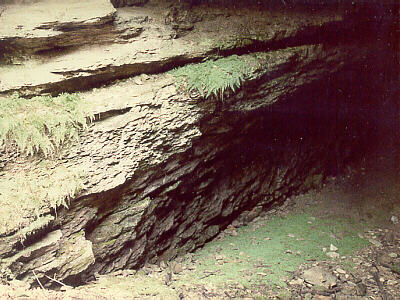
Mammoth Cave Entrance, Looking Down
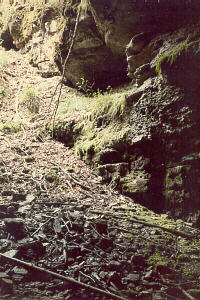
Mammoth Cave, Looking Up
Hint: if you visit here on
a hot summer day while wearing shorts and sandals, even going this close to
the cave entrance, you’ll feel like you stepped into a refrigerator! If
you’re ever going here to actually go into the cave, you’ll need to dress
appropriately.
Copyright © 1999 by J. Stein Carter. All rights reserved.
This page has been accessed  times since 25 Jun 2001.